
Why Electricians Are in Short Supply (and How It Affects Wages)
Finding a licensed electrician now comes with longer wait times and higher costs in many parts of the U.S. That shortage is changing pay, opportunity, and the long-term outlook for the trade.
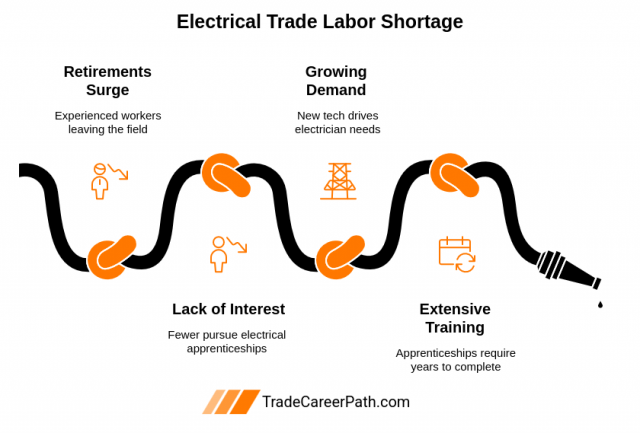
What’s Driving the Electrician Shortage
1. Retirements Outpacing New Workers
A significant portion of the electrician workforce is nearing retirement. As these experienced tradespeople leave, there simply aren’t enough new entrants to replace them. According to the U.S. Bureau of Labor Statistics (BLS), demand for electricians is projected to grow 6% from 2022 to 2032, faster than the average for all occupations.
2. Fewer Young People Choosing the Trades
For decades, high school graduates have been pushed toward four-year degrees, leaving fewer to pursue apprenticeships or trade school programs. This has reduced the pipeline of skilled workers entering the electrical trade.
3. Rising Demand for Electrical Work
Electricians are needed for far more than wiring houses. Demand is being fueled by:
- Solar power installations and battery storage systems
- Electric vehicle (EV) charging stations
- Smart home systems and building automation
- Energy efficiency upgrades in homes and businesses
- Ongoing new construction and renovations
4. Training Takes Time
While you don’t need a four-year degree, you do need structured training. Most electricians complete 4-5 years of apprenticeship or attend a trade school program before training as licensed.
How the Shortage Is Impacting Wages
Higher Starting Pay
Companies are offering higher wages to attract new apprentices and licensed electricians. In many states, entry-level electricians are earning more than ever before.
More Overtime
Fewer electricians mean more work available. Those willing to take on extra hours can significantly boost their annual income.
Premium Pay for Specialties
Specializing in solar, industrial, or commercial work can push wages into the top 10% of the field.
Electrician Pay by State (BLS, May 2025)
| State | Average Annual Wage | Median Annual Wage |
|---|---|---|
| Arizona | $64,220 | $61,060 |
| California | $85,860 | $76,160 |
| Florida | $57,660 | $57,250 |
| Illinois | $92,230 | $99,560 |
| New York | $84,860 | $78,750 |
| Ohio | $68,840 | $64,700 |
| Texas | $59,280 | $58,570 |
| Washington | $94,470 | $95,220 |
Source: U.S. Bureau of Labor Statistics, Occupational Employment and Wage Statistics (May 2025). SOC Code 47-2111 Electricians
Physical and Career Considerations
Electrical work is hands-on and physical. It can involve climbing, crawling, and working outdoors in all types of weather. Safety is critical when working with high voltage, but the trade offers long-term job security and career mobility. Many electricians move into project management, estimating, inspection, or teaching roles later in their careers.
Why Now Is a Smart Time to work as an Electrician
For those willing to commit to the training, the shortage creates:
- Higher wages and better benefits
- Steady work in nearly every part of the country
- Opportunities to specialize in high-growth sectors like renewable energy
Next Steps
If you’re ready to explore this career path, check out our Electrician Career Guide for step-by-step instructions on training, licensing, and finding the right program.
About this guide: Researched and written by the TradeCareerPath Editorial Team. Our editorial team researches and sources every trade school and career guide using federal labor and education data, including BLS OEWS and Employment Projections, DOL apprenticeship records, IPEDS, College Scorecard, and state licensing boards. We follow the editorial standards documented at /editorial-policy/.