
Easiest Trades to Get Into
Quick answer: The easiest trades to get into are HVAC, automotive repair, and welding, since each has short training paths and hires beginners as helpers or trainees. Pay is solid too: plumbers earn a median of $63,800 a year, electricians $63,190, and HVAC technicians $61,010 (BLS, May 2025).
Many people want a hands on career that offers a practical path into the workforce without long academic timelines. Some trades have short training programs, clear skill requirements, and beginner friendly tasks that make them easier to enter compared to other technical fields.
This guide covers the easiest trades to get into along with related topics such as the quickest trades to learn, easy trades to pick up, and hands on jobs with strong long term potential. Wage figures below come from the Bureau of Labor Statistics (BLS, May 2025) and reflect median pay for full-time workers.
What Makes a Trade Easy to Enter
Some traits make certain trades more accessible for beginners:
- Short training or certificate programs
- Skills you can pick up quickly through hands on practice
- Predictable tasks and clear processes
- Entry level roles that do not require prior experience
- Opportunities for on the job training
These qualities help people step into a new field faster and build confidence early.
Easiest Trades to Get Into
Below are beginner friendly trades with clear paths into entry level roles. Each includes a link to the full guide on TradeCareerPath.
1. HVAC Technician
HVAC is one of the quickest skilled trades to learn because training focuses on practical diagnostics and equipment handling. Many programs can be completed in less than a year and entry level roles offer steady hands on experience. HVAC technicians earn a median of $61,010 a year (BLS, May 2025). Guide: How to Become an HVAC Technician
2. Automotive Technician
Auto tech programs emphasize hands on learning, making them one of the easiest trades to pick up if you enjoy mechanical tasks. Shops often hire trainees or helpers who learn on the job. Automotive service technicians earn a median of $50,620 a year (BLS, May 2025). Guide: How to Become an Auto Mechanic
3. Welding
Welding skills grow quickly with training and practice. Many students master basic weld types early which helps them qualify for entry level shop roles. Welders earn a median of $53,750 a year (BLS, May 2025). Guide: How to Become a Welder
4. Carpentry
Carpentry apprenticeships and helper roles make this trade easy to enter with no prior background. Early tasks focus on measuring, cutting, and assisting experienced carpenters. Carpenters earn a median of $60,580 a year (BLS, May 2025). Guide: How to Become a Carpenter
5. Plumbing
Plumbing may look complex but many people start as helpers or apprentices. Early work focuses on simple installs, tool setup, and straightforward repairs. Plumbers earn a median of $63,800 a year, the highest among the beginner-friendly trades on this list (BLS, May 2025). Guide: How to Become a Plumber
6. Electrical Helper and Apprentice Roles
Getting licensed as an electrician requires training, but the entry point is beginner friendly. Many people start as electrical helpers in residential settings. Electricians earn a median of $63,190 a year (BLS, May 2025). Guide: How to Become an Electrician
7. CNC Machinist
Machining is a good fit if you like precise, repeatable work in a shop setting. Programs teach you to read prints and run computer controlled machines, and many shops hire trainees. CNC machinists earn a median of $58,750 a year (BLS, May 2025). Guide: How to Become a CNC Machinist
8. Diesel Mechanic
If you enjoy mechanical work on bigger equipment, diesel repair is a steady entry point with strong demand from trucking and construction. Diesel mechanics earn a median of $61,770 a year (BLS, May 2025). Guide: How to Become a Diesel Mechanic
Quickest Trades to Get Into
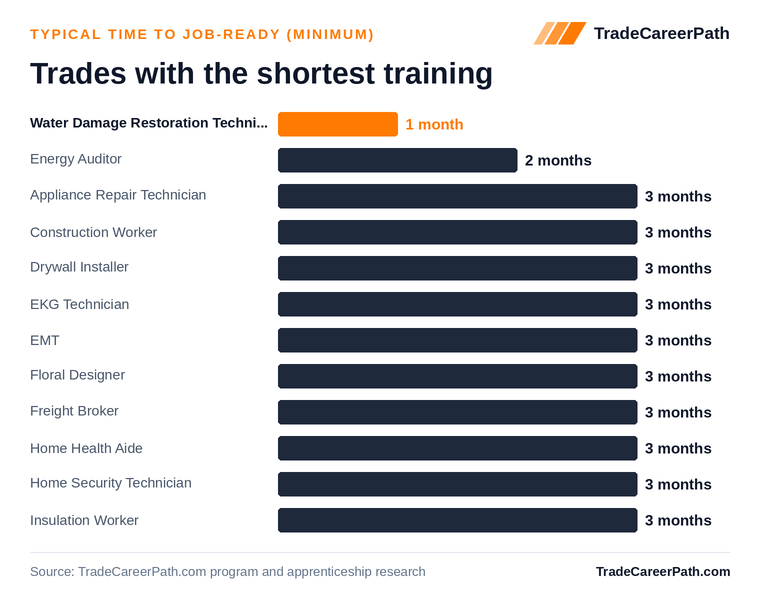
Some trades have shorter training paths and beginner friendly tasks which allows people to enter the workforce faster. These include:
- HVAC technician
- Welding
- Carpentry helper roles
- Automotive technician trainee
- CNC machinist trainee
These trades focus on skills that can be learned through repetition and hands on training.
Easiest Trade Skills to Learn
Certain hands on skills are easier for beginners because they rely on clear step based procedures:
- Basic electrical wiring support tasks
- MIG welding
- Carpentry measuring and cutting
- Reading shop prints and basic measurement
- Automotive inspections and simple repairs
These skills form the foundation for long term career growth.
Easy Trades to Get Into With No Experience
Some jobs take in complete beginners and offer structured on the job training. These roles include:
- Carpentry helper
- Plumbing apprentice
- Electrical helper
- HVAC assistant
- Auto shop trainee
Workers learn by doing which makes the path accessible.
Most Profitable Trades to Learn
Some beginner friendly trades pay well and reward continued skill development. Median annual pay for full-time workers (BLS, May 2025):
- Plumber: $63,800
- Electrician: $63,190
- HVAC technician: $61,010
- Carpenter: $60,580
- CNC machinist: $58,750
These fields reward advanced skills and certifications, and top earners in several of them clear $100,000.
2026 Trades That Pay Well
Stable and growing fields worth a look this year include:
- Solar installation technician, median $53,140
- Environmental field technician, median $62,280
- Industrial and commercial electrical work, median $63,190 for electricians
- Commercial HVAC systems, median $61,010 for HVAC technicians
- CNC machining and precision metalwork, median $58,750
Figures are median annual pay for full-time workers (BLS, May 2025). These roles continue to grow as technology and infrastructure evolve.
Where the Easy-Entry Healthcare Trades Lead
Several of the quickest trades to enter are the first rung of a longer clinical ladder. A CNA, medical assistant or patient care technician can bridge into an online nursing degree; a phlebotomist into a clinical laboratory science degree; a pharmacy technician toward a pharmacy degree; a dental assistant into dental hygiene programs; and a radiology or MRI tech into radiologic technology, MRI technologist programs or radiation therapy. Each program page lists accredited online and hybrid options by state.
Find Training Programs Near You
Use the tool below to explore hands on trade programs in your area.
About this guide: Researched and written by the TradeCareerPath Editorial Team. Our editorial team researches and sources every trade school and career guide using federal labor and education data, including BLS OEWS and Employment Projections, DOL apprenticeship records, IPEDS, College Scorecard, and state licensing boards. We follow the editorial standards documented at /editorial-policy/.