
How to Become an EKG Technician in 2026
Is EKG Technician Right for You?
The U.S. Department of Labor's O*NET profile for Cardiovascular Technologists and Technicians (SOC 29-2031) describes the work this way: Conduct tests on pulmonary or cardiovascular systems of patients for diagnostic, therapeutic, or research purposes. May conduct or assist in electrocardiograms, cardiac catheterizations, pulmonary functions, lung capacity, and similar tests.
What the work involves
- Conduct electrocardiogram (EKG), phonocardiogram, echocardiogram, stress testing, or other cardiovascular tests to record patients' cardiac activity, using specialized electronic test equipment, recording devices, or laboratory instruments.
- Explain testing procedures to patients to obtain cooperation and reduce anxiety.
- Monitor patients' blood pressure and heart rate using electrocardiogram (EKG) equipment during diagnostic or therapeutic procedures to notify the physician if something appears wrong.
- Obtain and record patient identification, medical history, or test results.
- Monitor patients' comfort and safety during tests, alerting physicians to abnormalities or changes in patient responses.
Skills and knowledge that matter
Skills: Active Listening, Speaking, Critical Thinking, Monitoring, Operations Monitoring, Reading Comprehension.
Knowledge: Customer and Personal Service, Medicine and Dentistry, English Language, Computers and Electronics.
Tools and technology you may use
Technology: Data base user interface and query software, Medical software, Web platform development software, JavaScript, MEDITECH software, Microsoft Excel.
Typical preparation
O*NET Job Zone Three (Medium Preparation Needed). Most occupations in this zone require training in vocational schools, related on-the-job experience, or an associate's degree. Employees in these occupations usually need one or two years of training involving both on-the-job experience and informal training with experienced workers. A recognized apprenticeship program may be associated with these occupations.
Interest fit
O*NET interest profile: Realistic, Investigative, Conventional. People who enjoy hands-on, practical work with tools, machines, plants, or materials often find this occupation a good fit.
Source: O*NET 31.0 (updated 2026-10-14)
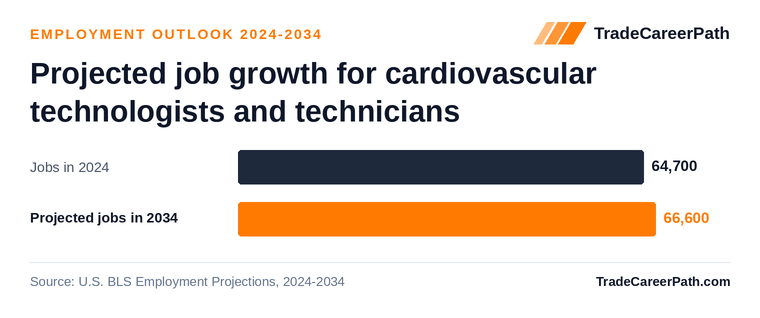
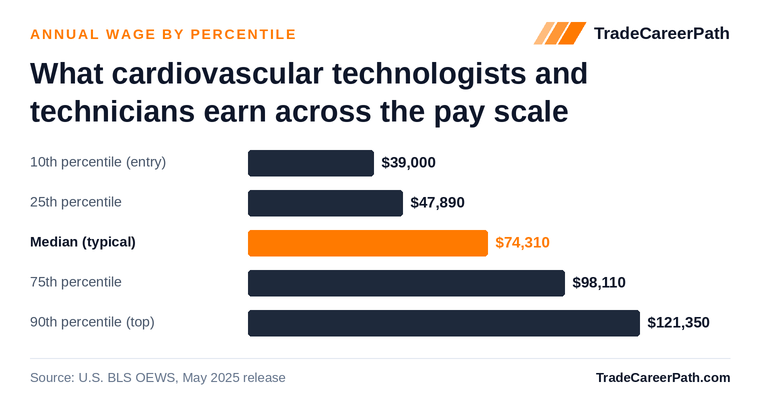
Quick answer: Training as an EKG technician usually takes 3 to 9 months through a certificate program, though some people choose a longer associate degree. Costs vary by program and school. Most states do not require a license, and certification is voluntary but preferred by many employers, such as the Certified EKG Technician (CET) from the National Healthcareer Association (NHA). The median salary for cardiovascular technologists and technicians is $74,310 per year ($35.73/hour), and projections point to about 3,400 openings nationwide each year (BLS, May 2025).
EKG technicians, also called electrocardiograph technicians, operate the equipment that records the heart’s electrical activity. They prep patients, attach electrodes, run tests, and pass clean readings to cardiologists and nurses. It is a fast way into healthcare for people who like precision and working with patients.
How to Become an EKG Technician
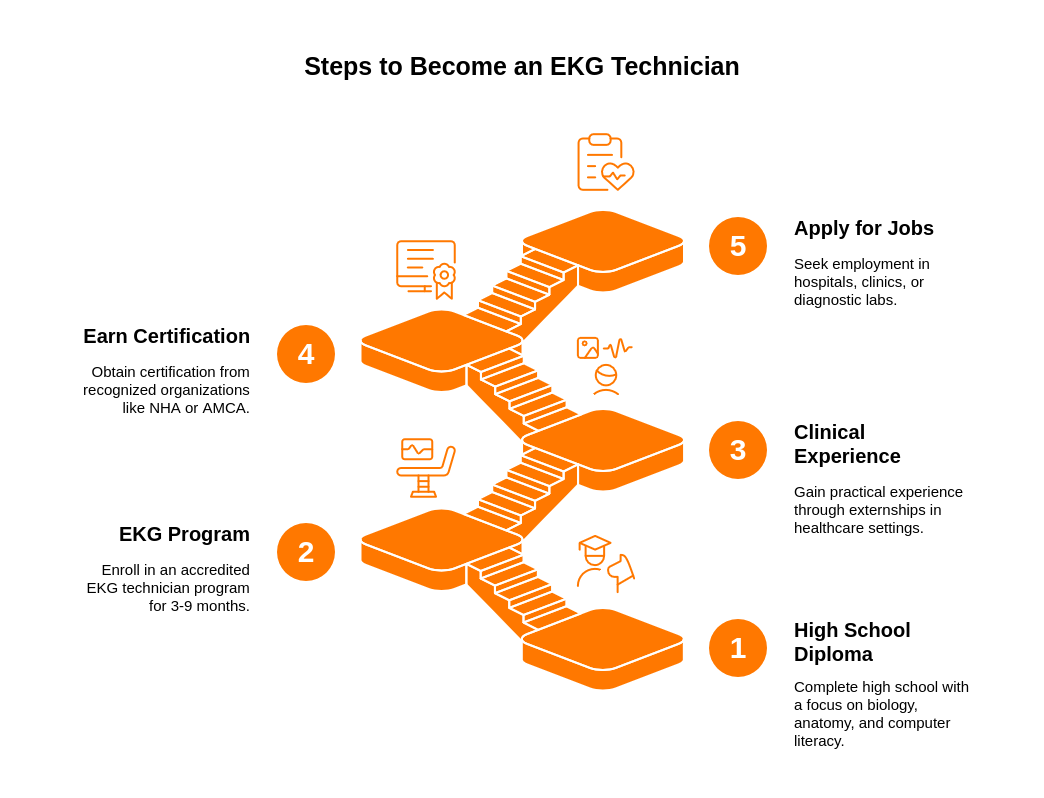
Most people enter the field in three to nine months through a certificate program, or in about two years through an associate degree. There is no single national license to pass. You build the career through training, hands-on clinical practice, and an optional certification.
1. Earn a high school diploma or GED
A high school diploma or GED is the minimum requirement for nearly every EKG training program. Before you enroll, it helps to take any biology, anatomy, or health science classes your school offers, since the training builds directly on how the heart and circulatory system work. Basic math and comfort with computers matter too, because EKG machines and patient records run on software you will use every shift. Good communication skills are just as important, since you will explain procedures to nervous patients and need to keep them calm. If you are changing careers and already hold a diploma or a degree in another field, you can move straight to the next step. Many EKG technicians come from other healthcare or service jobs and bring useful experience working directly with people.
2. Complete an EKG technician training program
This is the core of your preparation. Certificate programs typically run 3 to 9 months and are the most popular route, especially for adults who want to start working quickly. Associate degree programs take about two years and combine general-education credits with cardiovascular coursework, which can help if you plan to move into broader technologist roles later. Whichever format you choose, look for an accredited program. Typical coursework covers cardiac anatomy and physiology, medical terminology, how to operate an electrocardiograph, electrode placement, and how to read and recognize normal and abnormal heart rhythms. Good programs also include practice with stress tests and Holter monitors. Many schools deliver the lecture portion online, but the hands-on skills are taught in person, so confirm how and where the clinical component is handled before you sign up.
3. Gain clinical experience
Coursework gets you started, but employers want to see that you can do the work on real patients. Many programs build an externship into the curriculum, placing you in a hospital, cardiology clinic, or diagnostic lab where you practice attaching electrodes, running tests, and keeping patients comfortable under supervision. If your program does not include a placement, an entry-level role such as a patient care technician or medical assistant gets you inside a facility where you can learn the workflow and earn references. Aim to log enough supervised hours that you can place leads quickly, troubleshoot a noisy tracing, and stay calm when a patient is anxious. This hands-on time is also what many certification exams expect, so it does double duty toward your credential.
4. Earn a certification
Certification is voluntary in most states, but it signals competence and is preferred by many employers. The most recognized credentials are the Certified EKG Technician (CET) from the National Healthcareer Association (NHA) and the Certified Rhythm Analysis Technician (CRAT) from Cardiovascular Credentialing International (CCI). Some employers also accept the EKG technician certification offered by the American Medical Certification Association (AMCA). Eligibility usually depends on a combination of completing an approved training program or documented supervised experience, and each exam tests cardiac knowledge, equipment operation, and rhythm recognition. Check the certifying body’s current requirements and exam fees, and confirm which credential the employers in your area prefer before you register.
5. Apply for jobs in healthcare facilities
Hospitals, cardiology practices, diagnostic labs, and outpatient centers all hire EKG technicians. Tailor your resume to highlight your clinical hours and any certification you earned, and list the equipment you are comfortable operating, such as 12-lead EKG machines, Holter monitors, and stress-test setups. The references you built during your externship are valuable here, so ask supervisors who saw your work to vouch for you. Once you land a role, on-the-job experience can open the door to advanced certifications and broader cardiovascular technologist positions over time.
What Does an EKG Technician Do?
EKG technicians operate specialized equipment to measure and record the electrical activity of the heart. They play a direct role in diagnosing and monitoring heart conditions, freeing cardiologists and nurses to focus on treatment decisions.
Common duties
- Setting up and maintaining EKG machines
- Explaining procedures to patients
- Attaching electrodes and monitoring results
- Assisting with stress tests and Holter monitors
- Recording and analyzing heart rhythms
EKG technicians work closely with cardiologists, nurses, and medical assistants in hospitals, diagnostic labs, and outpatient clinics.
Skills That Make Great EKG Technicians
- Attention to detail and accuracy
- Good bedside manner and clear communication
- Knowledge of cardiac anatomy and physiology
- Comfort with computers and medical equipment
- Ability to stay calm under pressure
The best EKG technicians combine technical skill with empathy, helping patients feel at ease during stressful procedures.
Work Settings and Career Advancement
EKG technicians can work in:
- Hospitals and emergency departments
- Cardiology clinics and outpatient labs
- Diagnostic imaging centers
- Rehabilitation facilities
Career growth opportunities
- Holter Monitoring Technician
- Cardiovascular Technologist
- Medical Laboratory Technician
- Healthcare Supervisor or Instructor
Certification and Licensing Requirements
Most states do not require a license to work as an EKG technician, but certification shows professionalism and can support higher pay.
Recognized Certifying Organizations:
- National Healthcareer Association (NHA), Certified EKG Technician (CET)
- Cardiovascular Credentialing International (CCI), Certified Rhythm Analysis Technician (CRAT)
- American Medical Certification Association (AMCA), EKG Technician certification
Certification exams generally require completion of an approved training program or a period of supervised experience. Confirm current eligibility rules with the certifying body.
Cost and Duration of Training
- Time to complete: about 3 to 9 months for a certificate, or roughly 2 years for an associate degree
- Program cost: varies by program and school, with certificate programs generally costing less than degree programs
- Certification exam fees: vary by certifying body
Many schools deliver the lecture portion online, but plan for in-person clinical practice.
Pros and Cons of the EKG Tech Career
Pros:
- Entry in under a year through a certificate
- Consistent demand across the U.S.
- Direct patient interaction
- A pathway into advanced healthcare roles
Cons:
- Requires precision and focus under pressure
- Standing for long periods
- Some weekend or night shifts
Quick Facts: EKG Technician Salary, Education, and Outlook
Industry Organizations & Certifying Bodies
These are the recognized national organizations, unions, certifying bodies, and regulatory authorities that shape this trade. They issue the credentials, sponsor the apprenticeships, publish the codes, and represent workers and employers.
- National Healthcareer Association (NHA) Issues the Certified EKG Technician (CET) credential.
- Cardiovascular Credentialing International (CCI) Issues the Certified Rhythm Analysis Technician (CRAT) credential.
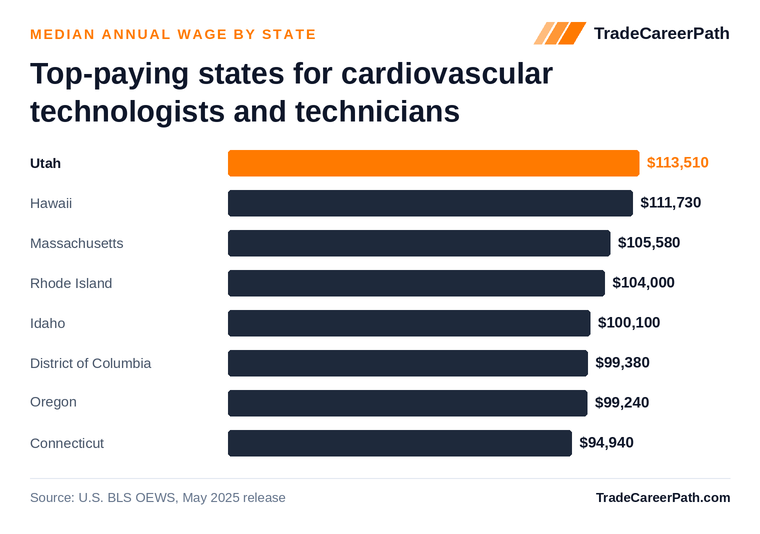
Wage and Employment Charts
EKG Technician Salary and Requirements by State
Select your state for local wage data, training options, and requirements:
Alabama · Alaska · Arizona · Arkansas · California · Colorado · Connecticut · Delaware · District of Columbia · Florida · Georgia · Hawaii · Idaho · Illinois · Indiana · Iowa · Kansas · Kentucky · Louisiana · Maine · Maryland · Massachusetts · Michigan · Minnesota · Mississippi · Missouri · Montana · Nebraska · Nevada · New Hampshire · New Jersey · New Mexico · New York · North Carolina · North Dakota · Ohio · Oklahoma · Oregon · Pennsylvania · Rhode Island · South Carolina · South Dakota · Tennessee · Texas · Utah · Vermont · Virginia · Washington · West Virginia · Wisconsin · Wyoming
Workplace Safety Snapshot
BLS Survey of Occupational Injuries and Illnesses data (2023-2024) report approximately 168.0 days-away, restricted, or transfer cases per 10,000 full-time-equivalent workers in cardiovascular technologists and technicians (about 1.68 per 100 FTE). Source: BLS Survey of Occupational Injuries and Illnesses, Table R98.
Frequently Asked Questions
How long does EKG technician training take?
It typically takes 3 to 9 months to finish a certificate program, though some people enter through a longer associate degree. A high school diploma or GED is generally required before you start.
Do you need a college degree to work as an EKG technician?
No. A college degree is not required to work as an EKG technician. Most people enter the field through a short certificate program, and a high school diploma or GED is typically the only educational prerequisite.
How much does EKG technician training cost?
Costs vary by program and school, with certificate programs generally costing less than associate degrees. Optional certification exams add a separate fee. Contact the schools you are considering for current tuition and exam pricing.
Is certification required to work as an EKG technician?
Most states do not require a license, and certification is usually voluntary. Many employers prefer it, though. The Certified EKG Technician (CET) credential from the National Healthcareer Association (NHA) and the Certified Rhythm Analysis Technician (CRAT) credential from Cardiovascular Credentialing International (CCI) are widely recognized.
Is it hard to train as an EKG technician?
Entry is relatively accessible because training is short and no degree is required. The work itself calls for precision, calm under pressure, and a solid grasp of cardiac anatomy, so the coursework and clinical practice take focus.
Can you take EKG technician training online?
Many schools offer the classroom portion of EKG training online, but the hands-on clinical practice with electrodes and monitoring equipment is done in person. Confirm a program's accreditation and clinical placement before enrolling.
How much does an EKG technician make?
The median wage for cardiovascular technologists and technicians, the group that includes EKG technicians, is $74,310 per year ($35.73 per hour), according to the BLS (May 2025). Pay varies by state, employer, and experience.
How Ekg Technician Pay Compares to Similar Trades
Side-by-side comparison of EKG Technician and the closest related careers, based on U.S. Bureau of Labor Statistics data (May 2025 OEWS + 2025-2035 Employment Projections).
| Career | Median Pay | 10-Year Growth | Annual Openings |
|---|---|---|---|
| EKG Technician this guide | $74,310 | +3.7% | 3,400 |
| Medical Assistant | $45,690 | +12.9% | 109,700 |
| Phlebotomy Technician | $45,230 | +6.8% | 18,000 |
| Radiologic Technologist (X-Ray Tech) | $80,110 | +5.0% | 13,000 |
| Diagnostic Medical Sonographer (Ultrasound Tech) | $96,590 | +13.9% | 6,000 |
Source: BLS Occupational Employment and Wage Statistics + BLS Employment Projections.
Sources
- U.S. Bureau of Labor Statistics, Occupational Employment and Wage Statistics (May 2025)
- U.S. Bureau of Labor Statistics, Employment Projections 2025-2035
- U.S. Bureau of Labor Statistics, Survey of Occupational Injuries and Illnesses (2023-2024, Table R98)
- U.S. Department of Labor, Wage and Hour Division, Davis-Bacon General Wage Determinations (2026)
Ekg Technician Salary by State
About this guide: Researched and written by the TradeCareerPath Editorial Team. Our editorial team researches and sources every trade school and career guide using federal labor and education data, including BLS OEWS and Employment Projections, DOL apprenticeship records, IPEDS, College Scorecard, and state licensing boards. We follow the editorial standards documented at /editorial-policy/.
Data sources
Figures on this page are sourced from the federal and state datasets below. Methodology: how we rank and source data.
| Data | Provider | Vintage |
|---|---|---|
| Occupational Employment and Wage Statistics (OEWS) | U.S. Bureau of Labor Statistics | May 2025 |
| Employment Projections | U.S. Bureau of Labor Statistics | 2025-2035 |
| Integrated Postsecondary Education Data System | National Center for Education Statistics (IPEDS) | 2024 |
| College Scorecard (school-level outcomes) | U.S. Department of Education | latest release |
| College Scorecard (field-of-study earnings) | U.S. Department of Education | latest release (updated 2026-06-12) |
| Occupational licensing requirements | CareerOneStop (U.S. Department of Labor) | latest release (updated 2026-02-22) |
| Registered apprenticeship programs | CareerOneStop / Apprenticeship.gov (U.S. Department of Labor) | latest release (updated 2025-10-25) |
| O*NET occupation profiles (skills, tasks, tools, job zones) | U.S. Department of Labor (O*NET / Employment & Training Admin.) | O*NET 31.0 (updated 2026-10-14) |