
How to Become a Gunsmith in 2026
Quick answer: Training as a gunsmith usually takes 6 months to 2 years of training through a certificate or associate degree program. Training costs vary by program and school. To manufacture or modify firearms commercially, you need a Federal Firearms License (FFL) from the ATF, while professional certification (such as the NRA Gunsmithing School Certification or AGI Master Gunsmith Program) is optional. The median gunsmith salary is $68,990 per year ($33.17/hour), and there are about 1,000 openings nationwide each year (BLS, May 2025).
Gunsmiths design, build, repair, and modify firearms for safety, performance, and appearance. The work blends machining and metalwork with fine, patient craftsmanship, and it is a good fit if you are mechanically inclined and enjoy precision.
How to Become a Gunsmith
Most people enter the field in about six months to two years, depending on the program they choose. There is no single national exam to pass. Instead, you build the career through training, hands-on experience, federal licensing, and optional certification.
1. Earn a high school diploma or GED
A high school diploma or GED is the minimum requirement for most gunsmithing programs and shop jobs. Before you enroll, it helps to build the skills the work depends on. Math gives you the measurement and tolerance skills that fitting parts requires, and mechanical drawing or drafting teaches you to read the diagrams and schematics used in firearm work. Any hands-on class you can take, whether shop, metalworking, welding, or woodworking, gives you a head start on the tactile side of the trade. Comfort with hand tools and basic machine tools matters, since precision work runs on calipers, files, lathes, and milling machines. If you are changing careers and already hold a diploma or a degree, you can move straight to the next step and bring useful skills in organization, mechanics, or customer service.
2. Complete a gunsmithing program
This is the core training, and you can pursue it through a trade school or an online program. Certificate programs are a faster route, while associate degree programs combine general coursework with gunsmithing instruction. Typical topics include firearm safety, machining, metallurgy, ballistics, and stock refinishing. You learn how actions function, how to diagnose malfunctions, how to fit and finish metal and wood, and how to work within firearm safety laws. Hands-on lab time is where you apply that knowledge, disassembling and reassembling rifles, pistols, and shotguns and practicing repairs on real hardware. Online formats can be flexible for working students, but plan for supervised, in-person practice because gunsmithing is a tactile trade. When comparing schools, ask about lab access, the equipment you will train on, and the instructors’ professional background.
3. Gain hands-on experience
Coursework prepares you, but employers want to see real experience. Look for an apprenticeship or entry-level shop role under an experienced gunsmith, where you can practice diagnosing mechanical malfunctions, fitting parts, refinishing stocks, and installing scopes and triggers under supervision. Many shops offer paid on-the-job training, which lets you learn the workflow of a real business while you build speed and confidence. As you work, keep track of the jobs you complete and the firearms you have handled, since that practical record matters to future employers and customers. The repetition of real repair and customization work is how you move from textbook knowledge to dependable, professional-quality results.
4. Obtain a Federal Firearms License (FFL)
To manufacture, repair for hire, or modify firearms commercially, you typically need a Federal Firearms License (FFL) from the U.S. Bureau of Alcohol, Tobacco, Firearms and Explosives (ATF). The ATF regulates the firearms industry, and the license type you need depends on the work you plan to do and where you do it. Apply directly through the ATF, follow the application steps and background requirements, and confirm any state or local rules that apply to your business. Because federal compliance is central to working legally as a gunsmith, take time to understand recordkeeping and storage obligations before you take on paid work. Check the ATF for current requirements rather than relying on secondhand summaries.
5. Consider optional certification
Certification is optional rather than legally required, but it can strengthen your resume and signal commitment to the craft. This page lists two examples that gunsmiths pursue: the NRA Gunsmithing School Certification and the American Gunsmithing Institute (AGI) Master Gunsmith Program. These programs can build credibility with employers and customers, especially when you are establishing yourself or working independently. Industry membership can help too. The American Gunsmithing Association (AGA) supports professional gunsmiths and is a way to connect with the wider trade. Keep in mind that the FFL from the ATF, not any certification, is the credential that governs commercial firearm work.
6. Start your career or open a shop
Many gunsmiths work for gun shops or firearm manufacturers, where steady repair, assembly, and customization work builds a broad skill set. Others specialize in areas like custom rifle building, antique restoration, or engraving. With experience and an FFL, some gunsmiths open their own licensed repair businesses and serve a niche clientele directly. When you are job hunting, lean on the contacts you made during training and any apprenticeship, since the trade is specialized and word of mouth matters. Over time, advanced skills, a strong reputation, and a loyal customer base are what raise your earning potential.
What Does a Gunsmith Do?
Gunsmiths design, build, repair, and modify firearms for safety, performance, and appearance. They often specialize in:
- Diagnosing and repairing mechanical malfunctions
- Assembling or customizing rifles, pistols, and shotguns
- Refinishing, engraving, or restoring antique firearms
- Installing scopes, triggers, and custom parts
- Testing firearms for accuracy and safety
The work pairs engineering precision with hands-on craftsmanship, and many gunsmiths build a reputation in a specialty like custom builds or restoration.
Skills That Make Great Gunsmiths
- Precision and attention to detail
- Mechanical and machining knowledge
- Patience and problem-solving
- Understanding of firearm safety laws
- Metalworking, woodcraft, and engraving skills
Work Settings for Gunsmiths
Gunsmiths work in a range of settings, including:
- Gun shops and firearm retailers
- Firearm manufacturers
- Independent, licensed repair businesses
- Custom and restoration workshops
Education and Certification Paths
| Pathway | Typical Duration | Outcome |
|---|---|---|
| Certificate | 6 to 12 months | Entry level preparation |
| Associate Degree | About 2 years | Common credential |
| FFL (ATF) | Application based | Required for commercial work |
| Optional certification (NRA, AGI) | Varies | Builds credibility |
Training costs vary by program and school, so confirm current tuition before you enroll.
Career Growth and Advancement
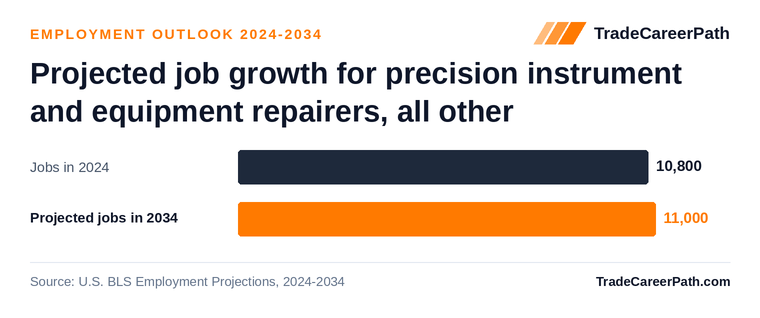
With experience, gunsmiths can move into more specialized or independent work:
- Specialist gunsmith focused on custom builds, restoration, or engraving
- Shop lead or supervisor at a larger retailer or manufacturer
- Independent shop owner operating under an FFL
- Manufacturing technician working on production firearms
Pros and Cons of the Gunsmithing Trade
Pros
- Blend of art, mechanics, and precision
- Specialized niche with dedicated clientele
- Opportunities for custom and collectible firearm work
- Potential to run your own licensed shop
Cons
- Requires federal licensing and ongoing compliance
- Niche industry with limited entry points
- Tools and equipment can be costly
Quick Facts: Gunsmith Salary, Education, and Outlook
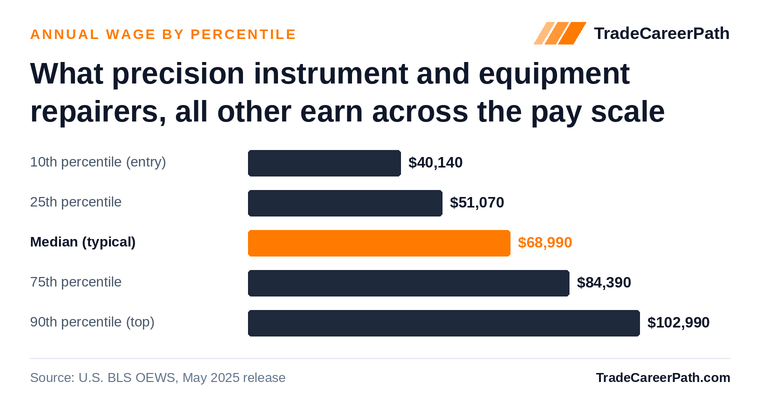

Industry Organizations & Certifying Bodies
These are the recognized national organizations, unions, certifying bodies, and regulatory authorities that shape this trade. They issue the credentials, sponsor the apprenticeships, publish the codes, and represent workers and employers.
- American Gunsmithing Association (AGA) Industry association supporting professional gunsmiths.
- U.S. Bureau of Alcohol, Tobacco, Firearms and Explosives (ATF) Federal regulator; gunsmiths who manufacture or modify firearms typically need a Federal Firearms License.
Wage and Employment Charts
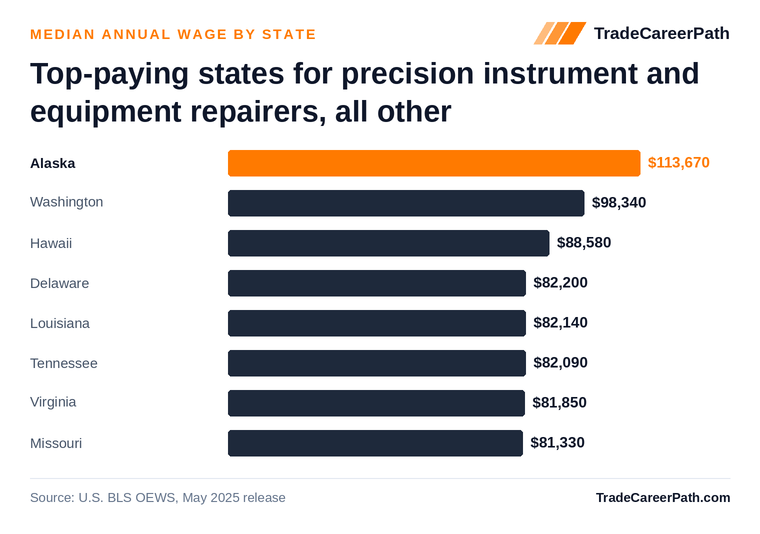
Gunsmith Salary and Requirements by State
Select your state for local wage data, training options, and requirements:
Alabama · Alaska · Arizona · Arkansas · California · Colorado · Connecticut · Delaware · District of Columbia · Florida · Georgia · Hawaii · Idaho · Illinois · Indiana · Iowa · Kansas · Kentucky · Louisiana · Maine · Maryland · Massachusetts · Michigan · Minnesota · Mississippi · Missouri · Montana · Nebraska · Nevada · New Hampshire · New Jersey · New Mexico · New York · North Carolina · North Dakota · Ohio · Oklahoma · Oregon · Pennsylvania · Rhode Island · South Carolina · South Dakota · Tennessee · Texas · Utah · Vermont · Virginia · Washington · West Virginia · Wisconsin · Wyoming
Frequently Asked Questions
How long does gunsmith training take?
It typically takes 6 months to 2 years of training. The most common entry path is a certificate or associate degree program. A high school diploma or GED is generally required to get started.
Do you need a college degree to work as a gunsmith?
No. A college degree is not required to work as a gunsmith. Most people enter the field through a certificate or associate degree program. A high school diploma or GED is typically the only educational prerequisite.
How much does gunsmithing training cost?
Costs vary widely by program format and school, so check current tuition with each school you are considering. Certificate programs generally cost less than associate degree programs, and online options can be more flexible for working students.
Do gunsmiths need a license?
To manufacture or modify firearms commercially, gunsmiths typically need a Federal Firearms License (FFL) from the U.S. Bureau of Alcohol, Tobacco, Firearms and Explosives (ATF). Requirements depend on the work you perform and your location, so confirm details with the ATF.
Is gunsmith certification required?
Certification is optional rather than legally required. Credentials such as the NRA Gunsmithing School Certification or the American Gunsmithing Institute (AGI) Master Gunsmith Program can strengthen your resume, but the FFL from the ATF is the credential that governs commercial work.
Is it hard to train as a gunsmith?
Entry is accessible because no college degree is required and most people finish training in 6 months to 2 years. The work itself demands patience, precision, and steady hands, plus a working knowledge of firearm safety and federal regulations.
Can you study gunsmithing online?
Yes. Many gunsmithing programs are offered through trade schools and online formats. Online programs can cover firearm safety, machining, metallurgy, ballistics, and stock refinishing, though hands-on practice is an important part of building real skill.
How Gunsmith Pay Compares to Similar Trades
Side-by-side comparison of Gunsmith / Firearms Technician and the closest related careers, based on U.S. Bureau of Labor Statistics data (May 2025 OEWS + 2025-2035 Employment Projections).
| Career | Median Pay | 10-Year Growth | Annual Openings |
|---|---|---|---|
| Gunsmith / Firearms Technician this guide | $68,990 | +2.5% | 1,000 |
| CNC Machinist | $58,750 | +1.0% | 26,100 |
| Welding | $53,750 | +2.4% | 40,300 |
| Maintenance Technician | $49,590 | +4.2% | 148,700 |
Source: BLS Occupational Employment and Wage Statistics + BLS Employment Projections.
Sources
- U.S. Bureau of Labor Statistics, Occupational Employment and Wage Statistics (May 2025)
- U.S. Bureau of Labor Statistics, Employment Projections 2025-2035
- U.S. Bureau of Labor Statistics, Survey of Occupational Injuries and Illnesses (2023-2024, Table R98)
- U.S. Department of Labor, Wage and Hour Division, Davis-Bacon General Wage Determinations (2026)
Gunsmith Salary by State
About this guide: Researched and written by the TradeCareerPath Editorial Team. Our editorial team researches and sources every trade school and career guide using federal labor and education data, including BLS OEWS and Employment Projections, DOL apprenticeship records, IPEDS, College Scorecard, and state licensing boards. We follow the editorial standards documented at /editorial-policy/.
Data sources
Figures on this page are sourced from the federal and state datasets below. Methodology: how we rank and source data.
| Data | Provider | Vintage |
|---|---|---|
| Occupational Employment and Wage Statistics (OEWS) | U.S. Bureau of Labor Statistics | May 2025 |
| Employment Projections | U.S. Bureau of Labor Statistics | 2025-2035 |
| Integrated Postsecondary Education Data System | National Center for Education Statistics (IPEDS) | 2024 |
| College Scorecard (school-level outcomes) | U.S. Department of Education | latest release |
| College Scorecard (field-of-study earnings) | U.S. Department of Education | latest release (updated 2026-06-12) |
| Occupational licensing requirements | CareerOneStop (U.S. Department of Labor) | latest release (updated 2026-02-22) |
| Registered apprenticeship programs | CareerOneStop / Apprenticeship.gov (U.S. Department of Labor) | latest release (updated 2025-10-25) |
| O*NET occupation profiles (skills, tasks, tools, job zones) | U.S. Department of Labor (O*NET / Employment & Training Admin.) | O*NET 31.0 (updated 2026-10-14) |