
How to Become a Patient Care Technician in 2026
Is Patient Care Technician Right for You?
The U.S. Department of Labor's O*NET profile for Nursing Assistants (SOC 31-1131) describes the work this way: Provide or assist with basic care or support under the direction of onsite licensed nursing staff. Perform duties such as monitoring of health status, feeding, bathing, dressing, grooming, toileting, or ambulation of patients in a health or nursing facility. May include medication administration and other health-related tasks. Includes nursing care attendants, nursing aides, and nursing attendants.
What the work involves
- Turn or reposition bedridden patients.
- Answer patient call signals, signal lights, bells, or intercom systems to determine patients' needs.
- Feed patients or assist patients to eat or drink.
- Measure and record food and liquid intake or urinary and fecal output, reporting changes to medical or nursing staff.
- Provide physical support to assist patients to perform daily living activities, such as getting out of bed, bathing, dressing, using the toilet, standing, walking, or exercising.
Skills and knowledge that matter
Skills: Service Orientation, Social Perceptiveness, Active Listening, Monitoring, Speaking, Reading Comprehension.
Knowledge: Customer and Personal Service, Administration and Management, English Language, Public Safety and Security.
Tools and technology you may use
Tools: Adjustable hospital beds, Anti-embolism elastic stockings, Automated blood pressure cuffs, Automated external defibrillators AED, Bed cradles, Bladder ultrasounds.
Technology: Business intelligence and data analysis software, Accounting software, Medical software, Apache Spark, Epic Systems, MEDITECH software.
Typical preparation
O*NET Job Zone Three (Medium Preparation Needed). Most occupations in this zone require training in vocational schools, related on-the-job experience, or an associate's degree. Employees in these occupations usually need one or two years of training involving both on-the-job experience and informal training with experienced workers. A recognized apprenticeship program may be associated with these occupations.
Interest fit
O*NET interest profile: Social, Realistic, Conventional. People who enjoy working with, helping, and teaching other people often find this occupation a good fit.
Source: O*NET 29.1 (updated 2026-06-13)
Quick answer: Training as a patient care technician usually takes 6 months to 2 years. You finish a certificate or associate degree program, complete supervised clinical hours, and many employers prefer a credential such as the Certified Patient Care Technician/Assistant (CPCT/A) from the National Healthcareer Association or the Registered Patient Care Technician (RPCT) from American Medical Technologists. Certification and CNA rules vary by state and employer. The median pay is $42,260 per year ($20.32/hour), and employers post about 204,100 openings nationwide each year (BLS, May 2025).
Patient care technicians (PCTs) provide bedside care in hospitals, nursing homes, and clinics, working under the supervision of nurses and doctors. The role mixes hands-on clinical tasks like checking vital signs and drawing blood with everyday support that keeps patients comfortable and safe.
How to Become a Patient Care Technician
Most people enter this field in about six months to two years, depending on the program they choose. You build the career through training, supervised clinical hours, and a certification many employers look for.
1. Earn a high school diploma or GED
A high school diploma or GED is the baseline requirement for every patient care technician program and almost every entry-level healthcare job. Before you enroll, it helps to take science classes such as biology, anatomy, and chemistry, since PCT coursework builds directly on them. Comfort with basic math matters too, because the job involves measuring vital signs, recording intake and output, and following medication-related instructions accurately. If you are changing careers and already hold a diploma or a degree, you can move straight to training. Strong communication and a steady, calm temperament go a long way in patient care, so any past work involving customer service, caregiving, or teamwork is useful preparation. This step is mostly about confirming you meet the entry requirement and building the study habits the program will demand.
2. Complete a patient care technician training program
This is the core credential. Programs are offered at trade and technical schools, community colleges, and some hospitals, and they generally take 6 to 12 months for a certificate or about 2 years for an associate degree. Coursework typically covers human anatomy and physiology, infection control, vital signs, phlebotomy (drawing blood), EKG/ECG monitoring, basic nursing skills, and direct patient interaction. Many programs prepare you to sit for certification exams as part of the curriculum. When comparing schools, ask whether the program includes a supervised clinical placement, whether it is accredited, and which certifications its graduates typically earn. Some coursework is available online or in a hybrid format, but the hands-on clinical training must be completed in person. Confirm tuition directly with each school, since costs vary by program, location, and format.
3. Gain clinical experience
Classroom learning prepares you, but employers want to see real hands-on practice. Most PCT programs build in supervised clinical hours or an externship at a hospital or nursing facility, where you practice taking vital signs, assisting with mobility and hygiene, drawing blood, and running EKGs under the guidance of nurses and instructors. Treat these rotations seriously, because they are where you learn the pace of a real unit and often where you make the contacts that lead to a first job. If your program does not include a placement, an entry-level role such as a nursing assistant or hospital aide gets you inside a facility and lets you build the same skills while you earn. Keep a record of the procedures you have performed and the settings you have worked in, since that experience strengthens your job applications.
4. Earn certification
Requirements vary by state and employer, but a recognized credential makes you more competitive and is often preferred or required. The two most widely recognized PCT credentials are the Certified Patient Care Technician/Assistant (CPCT/A) from the National Healthcareer Association (NHA) and the Registered Patient Care Technician (RPCT) from American Medical Technologists (AMT). Both involve passing an exam that tests clinical knowledge in areas like phlebotomy, EKG, and basic patient care. Many states also require Certified Nursing Assistant (CNA) status, and some PCTs add separate phlebotomy or EKG certifications to broaden their skills. Check the specific rules for your state and target employers before you choose which exams to take, and confirm eligibility requirements directly with the certifying organization.
5. Apply for patient care technician jobs
Hospitals, nursing homes, dialysis centers, rehabilitation facilities, and outpatient clinics all hire PCTs. Tailor your resume to highlight your clinical hours, the procedures you can perform, and any certifications you hold, then apply directly through hospital career portals and healthcare job boards. The contacts you made during clinical rotations are often the fastest route to an interview, so follow up with units where you trained. Once you land a role, on-the-job experience and added certifications can open the door to senior PCT positions, and many technicians use the job as a stepping stone toward licensed practical nurse (LPN) or registered nurse (RN) careers.
What Does a Patient Care Technician Do?
Patient care technicians work in hospitals, nursing homes, and clinics, helping patients with daily needs and basic clinical care. The role combines technical skill with steady, compassionate support, and PCTs are often the staff members patients see most during their stay.
Typical duties include:
- Checking vital signs (blood pressure, pulse, temperature)
- Drawing blood and collecting lab samples
- Assisting patients with mobility, bathing, and meals
- Performing EKGs and monitoring equipment
- Supporting nurses and doctors during procedures
PCTs play a crucial part in patient comfort, safety, and recovery.
Skills That Make a Great Patient Care Technician
- Compassion and empathy for patients
- Attention to detail
- Strong communication skills
- Ability to follow instructions precisely
- Physical stamina and emotional resilience
Patient Care Technician Training Options
You can train for this career at:
- Trade and technical schools, with short programs and hands-on labs
- Community colleges, offering certificate, diploma, or associate degree programs
- Online or hybrid courses, with flexible scheduling and local clinical placements
Certification and Licensing
Requirements vary by state and employer, and many employers prefer or require a credential. Common options include:
- CPCT/A (Certified Patient Care Technician/Assistant) from the National Healthcareer Association (NHA)
- RPCT (Registered Patient Care Technician) from American Medical Technologists (AMT)
- CNA (Certified Nursing Assistant), required in many states
- Phlebotomy or EKG certifications, optional but valuable
Always verify state-specific and employer requirements before enrolling in a program.
Education and Certification Paths
| Pathway | Typical Duration | Outcome |
|---|---|---|
| Certificate | 6 to 12 months | Entry level preparation |
| Associate Degree | About 2 years | Broader clinical foundation |
| On-the-job training | Varies | Common for entry-level hires |
Career Growth Opportunities
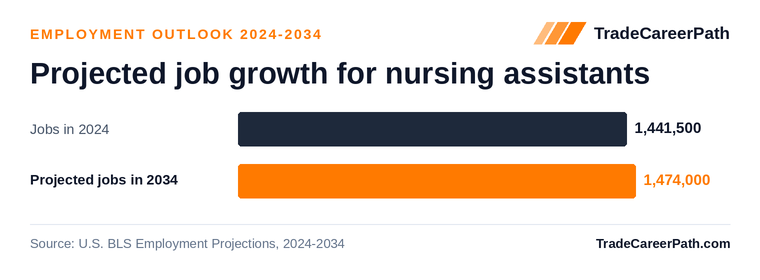
Many PCTs advance into higher-paying healthcare roles, including:
- Licensed Practical Nurse (LPN)
- Registered Nurse (RN)
- Medical Assistant (MA)
- Phlebotomist or EKG Technician
Cost and Duration of Training
- Program cost: varies by program and school; contact schools directly for current tuition
- Time to complete: about six months to two years
- Certification: preferred or required by many employers, with exam fees set by the certifying organization
Some coursework is available online, though clinical hours must be completed in person.
Pros and Cons of Being a PCT
Pros:
- Short training time
- Strong demand in hospitals and nursing homes
- Pathway to nursing and other advanced healthcare roles
- Meaningful, people-centered work
Cons:
- Physically demanding shifts
- Exposure to illness or injury risk
- Emotional strain from patient care
Quick Facts: Patient Care Technician Salary, Education, and Outlook
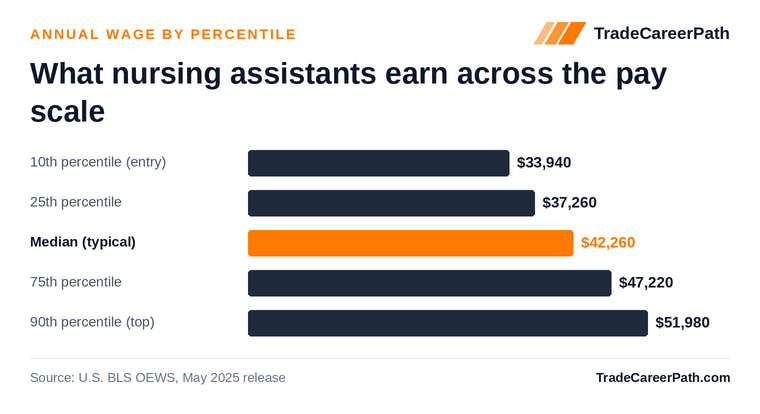
Start Your PCT Career
With short training programs and clear opportunities to advance, training as a patient care technician is a practical way to start a career in healthcare.
Industry Organizations & Certifying Bodies
These are the recognized national organizations, unions, certifying bodies, and regulatory authorities that shape this trade. They issue the credentials, sponsor the apprenticeships, publish the codes, and represent workers and employers.
- National Healthcareer Association (NHA) Issues the Certified Patient Care Technician (CPCT/A) credential.
- American Medical Technologists (AMT) Issues the Registered Patient Care Technician (RPCT) credential.
Wage and Employment Charts
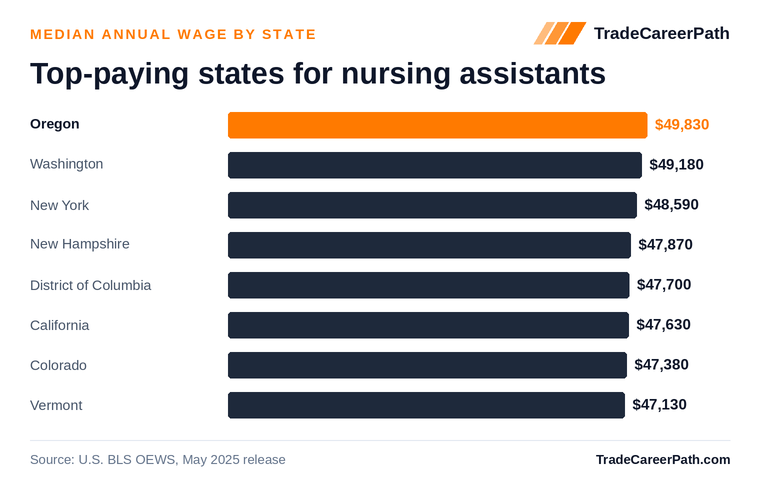
Patient Care Technician Salary and Requirements by State
Select your state for local wage data, training options, and requirements:
Alabama · Alaska · Arizona · Arkansas · California · Colorado · Connecticut · Delaware · District of Columbia · Florida · Georgia · Hawaii · Idaho · Illinois · Indiana · Iowa · Kansas · Kentucky · Louisiana · Maine · Maryland · Massachusetts · Michigan · Minnesota · Mississippi · Missouri · Montana · Nebraska · Nevada · New Hampshire · New Jersey · New Mexico · New York · North Carolina · North Dakota · Ohio · Oklahoma · Oregon · Pennsylvania · Rhode Island · South Carolina · South Dakota · Tennessee · Texas · Utah · Vermont · Virginia · Washington · West Virginia · Wisconsin · Wyoming
Workplace Safety Snapshot
BLS Survey of Occupational Injuries and Illnesses data (2023-2024) report approximately 552.2 days-away, restricted, or transfer cases per 10,000 full-time-equivalent workers in nursing assistants (about 5.52 per 100 FTE). Source: BLS Survey of Occupational Injuries and Illnesses, Table R98.
Frequently Asked Questions
How long does patient care technician training take?
It typically takes 6 months to 2 years of training. The most common entry path is a certificate program (often a few months) or an associate degree (about 2 years). A high school diploma or GED is generally required to get started.
Do you need a college degree to work as a patient care technician?
No. A college degree is not required to work as a patient care technician. Most people enter the field through a certificate or associate degree program. A high school diploma or GED is typically the only educational prerequisite.
How much does patient care technician training cost?
Costs vary widely by program and school, with certificate programs at trade schools or community colleges generally costing less than degree programs. Contact programs directly for current tuition, since prices differ by location and format.
Is certification required to work as a patient care technician?
Requirements vary by state and employer. Many employers prefer or require a credential such as the Certified Patient Care Technician/ Assistant (CPCT/A) from the National Healthcareer Association (NHA) or the Registered Patient Care Technician (RPCT) from American Medical Technologists (AMT). Some states also require Certified Nursing Assistant (CNA) status. Check your state and employer rules.
Is it hard to train as a patient care technician?
Entry is relatively accessible because training is short and no college degree is required. The work itself is demanding, however, with physical tasks, long shifts, and direct responsibility for patient comfort and safety.
What is the difference between a patient care technician and a CNA?
A Certified Nursing Assistant (CNA) focuses on basic daily care such as bathing, feeding, and mobility. A patient care technician usually builds on CNA skills with additional clinical tasks like drawing blood, running EKGs, and collecting lab samples. Many PCTs hold CNA certification as well, and some states require it.
Can you train as a patient care technician online?
Some programs offer online or hybrid coursework, but the clinical and hands-on portions must be completed in person at a hospital, clinic, or lab. Confirm a program's clinical placement and accreditation before enrolling.
How Patient Care Technician Pay Compares to Similar Trades
Side-by-side comparison of Patient Care Technician and the closest related careers, based on U.S. Bureau of Labor Statistics data (May 2025 OEWS + 2024-2034 Employment Projections).
| Career | Median Pay | 10-Year Growth | Annual Openings |
|---|---|---|---|
| Patient Care Technician this guide | $42,260 | +2.3% | 204,100 |
| Certified Nursing Assistant (CNA) | $42,260 | +2.3% | 204,100 |
| Medical Assistant | $45,690 | +12.5% | 112,300 |
| Phlebotomy Technician | $45,230 | +5.6% | 18,400 |
| Nursing LPN/LVN | $64,400 | +2.6% | 54,400 |
Source: BLS Occupational Employment and Wage Statistics + BLS Employment Projections.
Advance Your Career with a Degree
Experienced Patient Care Technician professionals often step up into degree-track careers where field experience is a hiring advantage:
- Registered Nurse (RN) - median pay $97,550 (BLS OEWS, May 2025); requires a 4-year degree
See all trade careers that require a 4-year degree.
Degree and Program Guides
- Online Respiratory Therapy Programs - the licensed critical-care credential
Sources
- U.S. Bureau of Labor Statistics, Occupational Employment and Wage Statistics (May 2025)
- U.S. Bureau of Labor Statistics, Employment Projections 2024-2034
- U.S. Bureau of Labor Statistics, Survey of Occupational Injuries and Illnesses (2023-2024, Table R98)
- U.S. Department of Labor, Wage and Hour Division, Davis-Bacon General Wage Determinations (2026)
Patient Care Technician Salary by State
About this guide: Researched and written by the TradeCareerPath Editorial Team. Our editorial team researches and sources every trade school and career guide using federal labor and education data, including BLS OEWS and Employment Projections, DOL apprenticeship records, IPEDS, College Scorecard, and state licensing boards. We follow the editorial standards documented at /editorial-policy/.
Data sources
Figures on this page are sourced from the federal and state datasets below. Methodology: how we rank and source data.
| Data | Provider | Vintage |
|---|---|---|
| Occupational Employment and Wage Statistics (OEWS) | U.S. Bureau of Labor Statistics | May 2025 |
| Employment Projections | U.S. Bureau of Labor Statistics | 2024-2034 |
| Integrated Postsecondary Education Data System | National Center for Education Statistics (IPEDS) | 2024 |
| College Scorecard (school-level outcomes) | U.S. Department of Education | latest release |
| College Scorecard (field-of-study earnings) | U.S. Department of Education | latest release (updated 2026-06-12) |
| Occupational licensing requirements | CareerOneStop (U.S. Department of Labor) | latest release (updated 2026-02-22) |
| Registered apprenticeship programs | CareerOneStop / Apprenticeship.gov (U.S. Department of Labor) | latest release (updated 2025-10-25) |
| O*NET occupation profiles (skills, tasks, tools, job zones) | U.S. Department of Labor (O*NET / Employment & Training Admin.) | O*NET 29.1 (updated 2026-06-13) |