
How to Become a Sterile Processing Tech in 2026
Is Sterile Processing Tech Right for You?
The U.S. Department of Labor's O*NET profile for Medical Equipment Preparers (SOC 31-9093) describes the work this way: Prepare, sterilize, install, or clean laboratory or healthcare equipment. May perform routine laboratory tasks and operate or inspect equipment.
What the work involves
- Examine equipment to detect leaks, worn or loose parts, or other indications of disrepair.
- Check sterile supplies to ensure that they are not outdated.
- Record sterilizer test results.
- Organize and assemble routine or specialty surgical instrument trays or other sterilized supplies, filling special requests as needed.
- Operate and maintain steam autoclaves, keeping records of loads completed, items in loads, and maintenance procedures performed.
Skills and knowledge that matter
Skills: Critical Thinking, Monitoring, Quality Control Analysis, Active Listening, Operations Monitoring, Reading Comprehension.
Knowledge: Customer and Personal Service, English Language, Biology, Production and Processing.
Tools and technology you may use
Technology: Calendar and scheduling software, Data base user interface and query software, Medical software, eClinicalWorks EHR software, Kronos Workforce Timekeeper, MEDITECH software.
Typical preparation
O*NET Job Zone 1-2 (Very Little to Some Preparation Needed). Usually requires a high school diploma or GED, though some occupations may not. Ranges from a few days to one year of on-the-job training.
Interest fit
O*NET interest profile: Realistic, Conventional, Investigative. People who enjoy hands-on, practical work with tools, machines, plants, or materials often find this occupation a good fit.
Source: O*NET 31.0 (updated 2026-10-14)
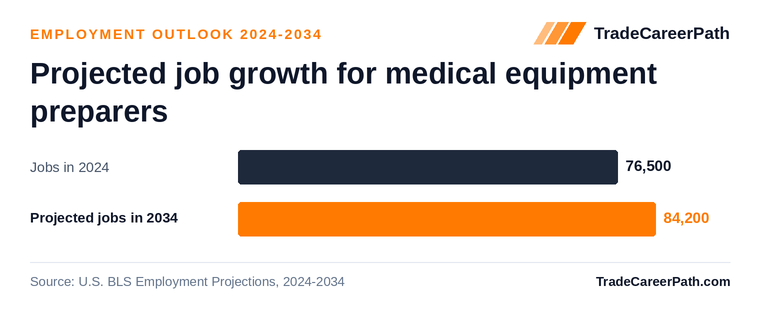
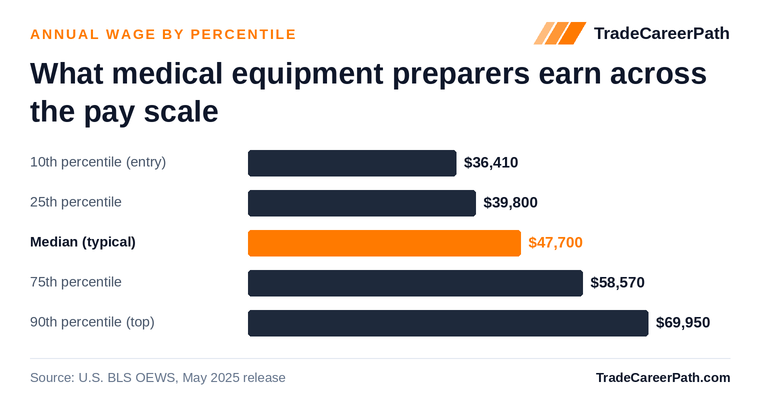
Quick answer: Training as a sterile processing tech usually takes 6 months to 2 years, through a certificate program or an associate degree. Costs vary by program and school. You get hands-on experience in a hospital externship, then earn a certification such as the CRCST from HSPA or the CSPDT from CBSPD, which many employers require. No college degree is needed. The median sterile processing tech salary is $47,700 per year ($22.93/hour), and there are about 10,700 openings nationwide each year (BLS, May 2025).
Sterile processing technicians, also called central service technicians, decontaminate, inspect, assemble, and sterilize the surgical instruments and equipment hospitals rely on every day. If you are detail-oriented and want a short, reliable path into healthcare, this role gets you working behind the scenes of the operating room without years of school.
How to Become a Sterile Processing Technician
Most people enter the field in about 6 months to 2 years, depending on whether they choose a certificate or an associate degree. There is no single national license to pass. You build the career through training, supervised hands-on experience, and a professional certification that many employers expect.
1. Earn a high school diploma or GED
A high school diploma or GED is the minimum requirement for almost every sterile processing program and entry-level job. Before you enroll, it helps to build the basics the work depends on. Biology and chemistry give you a head start on how pathogens spread and why sterilization works the way it does, and anatomy or medical terminology classes make instrument names and procedure trays easier to learn. Comfort with computers matters too, because departments track instrument sets, sterilizer cycles, and inventory in software systems. If you are changing careers and already hold a diploma or another degree, you can move straight to training. Many strong technicians come from unrelated fields and bring useful habits in organization, record keeping, and following detailed procedures, which is most of the job.
2. Complete a sterile processing training program
This is the core credential. Certificate programs are the most common route and often run 6 to 12 months, while associate degree programs take about 2 years and add general-education credits. You can find programs at community colleges, vocational and technical schools, and some hospitals that train staff in house. Coursework covers microbiology and infection control, decontamination, instrument identification and assembly, sterilization methods such as steam and low-temperature systems, packaging, and the documentation that proves a load was processed correctly. Online or hybrid formats handle the classroom portion, but you still need hands-on lab time, so confirm how each program delivers the practical work before you enroll. Costs vary widely by program and school, and some hospital-based programs reduce or cover tuition in exchange for a work commitment, so ask each school for current numbers.
3. Complete a clinical externship
Classroom learning prepares you, but employers want to see real department experience. Most certificate and degree programs build in a supervised externship in a hospital or surgery center sterile processing department. There you practice the full cycle on real instruments: receiving and decontaminating used trays, inspecting tools for damage or residue, assembling sets to a count sheet, running and monitoring sterilizers, and recording each load. This is where speed, accuracy, and protocol discipline come together. If your program does not place you, ask hospitals near you about externships or entry-level technician aide roles, since time inside a real department is the experience hiring managers value most and a strong reference can carry your application.
4. Earn a sterile processing certification
Certification is required or expected by many employers, and some require you to earn it within a set number of months after hire. The two recognized credentials are the Certified Registered Central Service Technician (CRCST) from the Healthcare Sterile Processing Association (HSPA, formerly IAHCSMM) and the Certified Sterile Processing and Distribution Technician (CSPDT) from the Certification Board for Sterile Processing and Distribution (CBSPD). Each path involves passing a written exam and meeting hands-on experience requirements, which you can often complete during or shortly after your externship. A handful of states, including New York and Tennessee, set their own registration or certification rules, so check your state health department in addition to the national bodies before you apply.
5. Apply for jobs and advance
Hospitals, ambulatory surgery centers, outpatient clinics, and dental and specialty practices all hire sterile processing technicians. Tailor your resume to highlight your training, externship, and any certification, and note specific skills such as steam and low-temperature sterilization or tray assembly to a count sheet. New technicians often start on evening or weekend shifts, which can be a faster way in. Once you are working, on-the-job experience plus credentials open the door to lead technician, sterile processing supervisor, surgical instrument specialist, and infection control support roles over time.
What Does a Sterile Processing Technician Do?
Sterile processing technicians keep surgical instruments and medical equipment clean, safe, and ready for use. They take in used instruments after procedures, decontaminate them, inspect each one, reassemble trays, sterilize the sets, and store them so the surgical team has exactly what it needs when it needs it. Their work directly supports patient safety and lets surgeons and nurses focus on care.
Typical responsibilities include:
- Cleaning and decontaminating surgical tools and trays
- Inspecting instruments for wear, residue, or damage
- Assembling, packaging, and labeling sterilized sets
- Operating and monitoring steam and low-temperature sterilizers
- Maintaining sterilization records and surgical supply inventory
This career suits detail-oriented people who take pride in consistency, cleanliness, and following procedures exactly.
Skills That Make a Great Sterile Processing Tech
- Attention to detail and consistency
- Knowledge of sterilization methods and equipment
- Organization and time management
- Teamwork in fast-paced environments
- Commitment to infection control and patient safety
Work Settings for Sterile Processing Techs
Sterile processing technicians work in:
- Hospital sterile processing or central service departments
- Ambulatory and outpatient surgery centers
- Outpatient clinics and specialty practices
- Dental and oral surgery offices
Certification and Licensing
Certifications
The two main credentials are:
- CRCST from the Healthcare Sterile Processing Association (HSPA, formerly IAHCSMM)
- CSPDT from the Certification Board for Sterile Processing and Distribution (CBSPD)
Both involve a written exam and hands-on experience requirements. Many employers require one of these credentials, often within a set time after hire.
State licensing
A few states, including New York and Tennessee, set their own registration or certification requirements. Many employers expect national certification even where the state does not mandate it.
Education and Certification Paths
| Pathway | Typical Duration | Outcome |
|---|---|---|
| Certificate | 6 to 12 months | Most common entry credential |
| Associate Degree | About 2 years | Adds general-education credits |
| Hospital-based program | Varies | On-the-job training to certification eligibility |
Career Growth and Advancement
With experience, sterile processing technicians can move into:
- Lead or Supervisor roles
- Surgical Instrument Specialist
- Operating Room Support Technician
- Infection Control Support roles
Cost and Duration of Training
- Program cost: varies by program and school; ask each school for current tuition
- Time to complete: about 6 months to 2 years
- Format: classroom or hybrid instruction plus a required hands-on externship
Some hospital-based programs may reduce or cover tuition in exchange for a work commitment.
Pros and Cons
Pros
- Quick entry into healthcare, often under a year
- Steady demand in hospitals and surgery centers
- Meaningful work that supports patient safety
- Clear path to lead and supervisory roles
Cons
- Repetitive tasks and long stretches of standing
- Strict sterilization protocols with little room for error
- Often includes evening, night, or weekend shifts
Start Your Sterile Processing Career
This is one of the fastest, most reliable entry points into healthcare. With a short training program and a recognized certification, you can start working in sterile processing and help keep surgery safe every day.
Find a sterile processing training program near you and start your journey today.
Quick Facts: Sterile Processing Tech Salary, Education, and Outlook

Industry Organizations & Certifying Bodies
These are the recognized national organizations, unions, certifying bodies, and regulatory authorities that shape this trade. They issue the credentials, sponsor the apprenticeships, publish the codes, and represent workers and employers.
- Healthcare Sterile Processing Association (HSPA, formerly IAHCSMM) Issues the CRCST (Certified Registered Central Service Technician) credential.
- Certification Board for Sterile Processing and Distribution (CBSPD) Issues the CSPDT credential.
Wage and Employment Charts
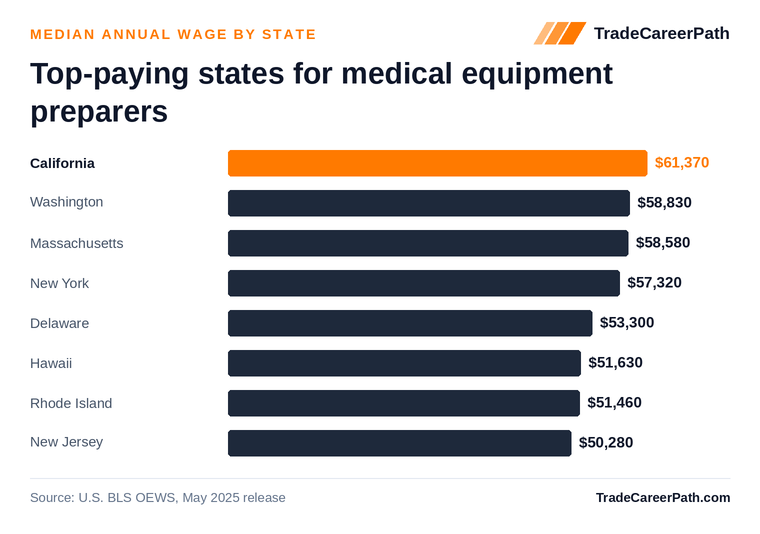
Sterile Processing Technician Salary and Requirements by State
Select your state for local wage data, training options, and requirements:
Alabama · Alaska · Arizona · Arkansas · California · Colorado · Connecticut · Delaware · District of Columbia · Florida · Georgia · Hawaii · Idaho · Illinois · Indiana · Iowa · Kansas · Kentucky · Louisiana · Maine · Maryland · Massachusetts · Michigan · Minnesota · Mississippi · Missouri · Montana · Nebraska · Nevada · New Hampshire · New Jersey · New Mexico · New York · North Carolina · North Dakota · Ohio · Oklahoma · Oregon · Pennsylvania · Rhode Island · South Carolina · South Dakota · Tennessee · Texas · Utah · Vermont · Virginia · Washington · West Virginia · Wisconsin · Wyoming
Workplace Safety Snapshot
BLS Survey of Occupational Injuries and Illnesses data (2023-2024) report approximately 300.0 days-away, restricted, or transfer cases per 10,000 full-time-equivalent workers in medical equipment preparers (about 3.00 per 100 FTE). Source: BLS Survey of Occupational Injuries and Illnesses, Table R98.
Frequently Asked Questions
How long does sterile processing tech training take?
Most people finish training in about 6 months to 2 years. The common entry path is a certificate program, often 6 to 12 months, or an associate degree of about 2 years. A high school diploma or GED is generally required to start.
Do you need a college degree to work as a sterile processing tech?
No. A college degree is not required. Most people enter the field through a certificate or associate degree program. A high school diploma or GED is typically the only educational prerequisite, and some employers hire and train candidates on the job.
How much does sterile processing training cost?
Costs vary widely by program and school, so check current tuition with each school directly. Community colleges, vocational schools, and some hospital-based programs all offer training, and hospital programs may reduce or cover the cost in exchange for a work commitment.
Is certification required to be a sterile processing tech?
Certification is required or expected by many employers, even where the state does not mandate it. The two main credentials are the CRCST from the Healthcare Sterile Processing Association (HSPA) and the CSPDT from the Certification Board for Sterile Processing and Distribution (CBSPD). A few states, such as New York and Tennessee, set their own requirements.
Is it hard to train as a sterile processing tech?
Entry is relatively accessible because no degree is required and training is short. The work itself rewards focus and consistency, since you follow strict sterilization protocols, stand for long stretches, and keep careful records that protect patient safety.
Can you train for sterile processing online?
Many programs offer classroom instruction online or in a hybrid format, but you also need hands-on practice in a sterile processing department. Programs usually arrange a clinical externship in a hospital so you can practice decontamination, assembly, and sterilization under supervision.
How many sterile processing technicians work in the United States?
BLS reports approximately 77,420 sterile processing technicians, grouped as medical equipment preparers, employed nationwide as of May 2025.
How Sterile Processing Tech Pay Compares to Similar Trades
Side-by-side comparison of Sterile Processing Technician and the closest related careers, based on U.S. Bureau of Labor Statistics data (May 2025 OEWS + 2025-2035 Employment Projections).
| Career | Median Pay | 10-Year Growth | Annual Openings |
|---|---|---|---|
| Sterile Processing Technician this guide | $47,700 | +10.8% | 10,700 |
| Surgical Technologist | $64,650 | +5.0% | 7,100 |
| Medical Assistant | $45,690 | +12.9% | 109,700 |
| Patient Care Technician | $42,260 | +2.6% | 196,200 |
Source: BLS Occupational Employment and Wage Statistics + BLS Employment Projections.
Advance Your Career with a Degree
Experienced Sterile Processing Technician professionals often step up into degree-track careers where field experience is a hiring advantage:
- Chemist - median pay $91,240 (BLS OEWS, May 2025); requires a 4-year degree
See all trade careers that require a 4-year degree.
Sources
- U.S. Bureau of Labor Statistics, Occupational Employment and Wage Statistics (May 2025)
- U.S. Bureau of Labor Statistics, Employment Projections 2025-2035
- U.S. Bureau of Labor Statistics, Survey of Occupational Injuries and Illnesses (2023-2024, Table R98)
- U.S. Department of Labor, Wage and Hour Division, Davis-Bacon General Wage Determinations (2026)
Sterile Processing Tech Salary by State
About this guide: Researched and written by the TradeCareerPath Editorial Team. Our editorial team researches and sources every trade school and career guide using federal labor and education data, including BLS OEWS and Employment Projections, DOL apprenticeship records, IPEDS, College Scorecard, and state licensing boards. We follow the editorial standards documented at /editorial-policy/.
Data sources
Figures on this page are sourced from the federal and state datasets below. Methodology: how we rank and source data.
| Data | Provider | Vintage |
|---|---|---|
| Occupational Employment and Wage Statistics (OEWS) | U.S. Bureau of Labor Statistics | May 2025 |
| Employment Projections | U.S. Bureau of Labor Statistics | 2025-2035 |
| Integrated Postsecondary Education Data System | National Center for Education Statistics (IPEDS) | 2024 |
| College Scorecard (school-level outcomes) | U.S. Department of Education | latest release |
| College Scorecard (field-of-study earnings) | U.S. Department of Education | latest release (updated 2026-06-12) |
| Occupational licensing requirements | CareerOneStop (U.S. Department of Labor) | latest release (updated 2026-02-22) |
| Registered apprenticeship programs | CareerOneStop / Apprenticeship.gov (U.S. Department of Labor) | latest release (updated 2025-10-25) |
| O*NET occupation profiles (skills, tasks, tools, job zones) | U.S. Department of Labor (O*NET / Employment & Training Admin.) | O*NET 31.0 (updated 2026-10-14) |